
The data backs this up. A 2023 J.D. Power study found that advisors without enough client time spent 41% more time on non-value-added tasks and had Net Promoter Scores up to 30 points lower than peers with adequate client-facing capacity. Meanwhile, Hearts and Wallets research cited by InvestmentNews found a 13-percentage-point gap between the share of clients who value proactivity (45%) and those actually satisfied with it (32%).
Preparation bridges that gap. This article walks through a step-by-step prep process, the variables that shape meeting outcomes, common mistakes to avoid, and how to handle different meeting types.
Key Takeaways
- Start full prep at least one week out: review the client profile, prior meeting notes, and any open action items
- Build every agenda backward from a specific meeting objective — and send it to the client 48 hours in advance
- Use clear, branded visuals — SEC research shows they improve investor decision quality by 19–25%
- Anticipate emotional state and likely objections — not just the financial topics on the agenda
- Close the loop within 24 hours: summary email, assigned action items, and a CRM update
The Step-by-Step Client Meeting Preparation Checklist
Preparation quality isn't about how long you spend — it's about how systematically you work through each stage. Two advisors spending the same amount of time can produce very different results depending on their process.
Step 1: Review the Client Profile and History
Start at least one week out. Re-read the client's goals, risk tolerance, life stage, and family situation. Then pull up every prior meeting note and check for:
- Open action items you committed to
- Promises made but not yet resolved
- Any concerns the client raised that weren't fully addressed
Also skim recent emails and messages outside your CRM. Clients often drop context clues in informal communication — a comment about a job change, a health issue, or a family event — that don't make it into formal notes. Missing those details signals inattention, and clients notice.
Morningstar's 2024 advisor-value research confirms that investors increasingly value personalized advice over a generic approach. Profile review is how you deliver it.
Step 2: Define Meeting Objectives and Build a Goal-Driven Agenda
Every meeting needs one primary outcome. Not five topics — one central decision or discussion that the meeting must accomplish.
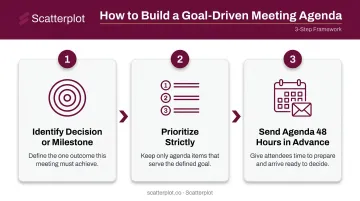
Build the agenda backward from that outcome:
- Identify the decision or milestone the meeting needs to reach (rebalancing, income planning, insurance gap review)
- Prioritize strictly — put the most critical item first so time pressure can't push it off the table
- Send the agenda 48 hours in advance and explicitly invite the client to add items
That last step matters more than it seems. Sharing the agenda in advance signals respect, creates shared ownership of the meeting, and often surfaces client concerns you didn't know existed before you walked in.
Step 3: Gather and Organize Financial Documents and Portfolio Data
Pull together everything relevant to this meeting's objectives:
- Updated portfolio performance reports
- Relevant client-supplied documents (tax returns, estate documents, insurance policies)
- Any third-party data you need to support a recommendation
While reviewing, actively look for gaps: underweighted asset classes, insurance shortfalls, pending distribution decisions, or goal-progress concerns. You want to arrive with specifics, not general impressions.
If a team member or operations staff compiled the data, verify the accuracy of key figures before the meeting. One wrong number cited confidently can erode credibility for the entire session.
Step 4: Prepare Market Context and Visual Materials
Clients make better decisions when they can see the bigger picture. Charts on interest rates, equity valuations, inflation trends, and portfolio allocation don't just inform — they reduce anxiety by replacing vague concern with concrete context.
SEC investor research found that visual aids outperformed traditional text-only presentations across all tested formats, reducing fees incurred in mutual fund decisions by 19–25%. The data is clear: visuals consistently outperform text-only presentations.
The challenge is the time required to build them. Kitces Research found that lead advisors spend less than 20% of their work week actually meeting with clients — the rest goes to administrative and operational tasks, including chart-building. Sourcing data, formatting visuals, and polishing decks before each meeting eats into the hours that matter most.
Platforms like Scatterplot are built to close that gap. Instead of rebuilding charts from scratch, advisors access a library of daily-updated, brand-customized slides and assemble a deck in minutes. Key features include:
- Daily-updated charts covering markets, rates, inflation, and economic trends
- Branded slides with your logo, colors, and disclosures already applied
- Guided talking points built into each slide
- One-click PDF download or direct in-platform presentation
For each key visual you present, prepare two to three talking points in advance so you can move naturally from the data to what it means for the client's specific situation.
Step 5: Rehearse Recommendations and Anticipate Objections
Run through your key recommendations aloud at least once. Verbal rehearsal sharpens delivery and reduces hesitation in the room.
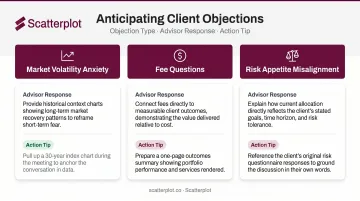
Then prepare for the three objections you're most likely to face:
- Market volatility anxiety — have historical context charts ready
- Fee questions — know your numbers and be ready to connect fees to outcomes
- Risk appetite misalignment — have a clear explanation of how their current allocation fits their stated goals
Finally, test your technology. If you're presenting via video conference or using a new platform, check it the day before. Technical friction at the start of a meeting costs you credibility before you've said a word.
Key Variables That Shape Client Meeting Outcomes
Two advisors can follow the same preparation checklist and still produce very different results. Outcomes depend on context — not just process.
Client Emotional State and Recency Bias
Before you walk into any meeting, consider what has happened in the market or in the client's personal life recently. A volatile week, a large unrealized loss, a job change — these shift the emotional tone of the meeting before you've opened a slide.
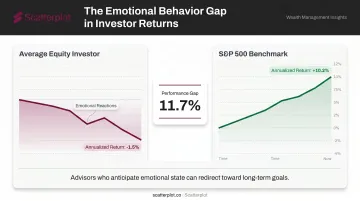
Research from DALBAR's QAIB studies consistently shows that the average equity investor significantly underperforms the S&P 500 — not because of strategy failures, but because of emotional reactions. Advisors who anticipate this can lead with empathy, recalibrate the agenda in real time, and redirect the conversation toward long-term goals rather than near-term volatility.
Meeting Type and Purpose
A new prospect meeting, a quarterly review for a longtime client, and an emergency call triggered by a market correction each require different preparation depths and different conversational tones. Treating them the same leads to mismatched expectations. See the section below on preparing for different meeting types.
Specificity of Client Goals
Clients with vague goals ("I want to grow my money") require different prep than clients with defined targets ("I want to retire at 58 with $180,000 in annual income"). Review how specific the client's stated goals are before the meeting, and plan to sharpen them if needed.
Vague goals create two problems:
- Recommendations become harder to anchor to anything concrete
- Clients struggle to commit, because the "why" isn't clear enough to act on
Common Mistakes Advisors Make in Client Meeting Prep
Even experienced advisors fall into habits that gradually erode meeting quality. These are the most common:
Walking in without refreshing on a client's current situation signals inattention. One missed detail — a prior commitment, a family change, a concern raised last time — can undermine trust immediately.
Without a specific outcome in mind, meetings drift toward general conversation. They end without decisions, without clear next steps, and without momentum carrying into the next interaction.
Citing numbers verbally forces clients to process complexity in real time, which increases anxiety and reduces the likelihood they act. Charts and visual context change that dynamic.
The summary email, action items, and CRM update should be mentally mapped before the meeting ends — not improvised the next morning when details are already fading.
Preparing for Different Types of Client Meetings
The meeting type should shape how much time you spend preparing, what you prioritize, and how you open the conversation.
New Prospect or Onboarding Meetings
Focus more on discovery than data. Research the prospect's background, prepare thoughtful questions to uncover goals and life context, and bring materials that demonstrate your process and communication style. In these meetings, the quality of your questions signals competence far more than the volume of charts you present.
Annual or Quarterly Reviews
These are the most preparation-intensive meetings. Pull full portfolio performance, review goal progress across all planning areas (not just investments), and prepare market context slides that connect macro conditions to their specific holdings.
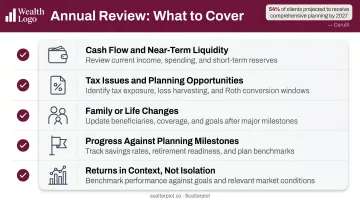
Cerulli projects that 54% of clients will receive comprehensive ongoing planning advice by 2027, up from 48%. Annual reviews should reflect that scope. At minimum, cover:
- Cash flow and near-term liquidity needs
- Tax issues and any planning opportunities
- Family or life changes since the last review
- Progress against specific planning milestones
- Returns in context — not returns in isolation
Event-Triggered Meetings
Speed and emotional attunement matter most here. Prepare a concise, data-backed narrative that acknowledges the specific trigger — a market correction, a rate shock, a personal event — and comes with a clear "here's what we're doing and why" message. Clients in these moments need specificity: what happened, how it affects their plan, and what action (if any) you're taking.
What to Do During and Immediately After the Meeting
What happens during and after a meeting determines whether your preparation actually pays off. A well-run conversation means little if nothing is captured and acted on.
During the meeting:
- Confirm the agenda at the start and note any additions the client wants
- Lead with the highest-priority item — never let it get pushed to the end
- Take detailed notes on client reactions, decisions made, and new concerns raised
- Close by proposing the next meeting date before anyone leaves
Immediately after:
- Send a summary email within 24 hours recapping key discussion points, decisions, and action items with owners and due dates
- Update your CRM and log meeting notes while the details are fresh
- Note what surprised you, what questions you weren't ready for, and what materials didn't land — that debrief directly improves the questions you ask and the slides you bring next time
Disclaimer
The content on this site is for informational and educational purposes only and does not constitute financial, investment, legal, or tax advice. It should not be relied upon as the basis for any investment decision. Past performance is not indicative of future results. Always consult a qualified financial professional before making any financial decisions.
Frequently Asked Questions
How should a financial advisor prepare for a client meeting?
Start by reviewing the client's full profile and prior meeting notes, then build a goal-driven agenda, gather relevant financial data, prepare market context visuals, and rehearse your key recommendations. The full process should begin at least one week before complex reviews.
How far in advance should a financial advisor prepare for a client meeting?
For annual reviews and complex meetings, start at least one week out. Use the day before to polish materials, run a technology check, and do a quick dry run of your key recommendations.
What should be on a financial advisor's pre-meeting checklist?
Core items: client profile and history review, defined meeting objective and written agenda, updated portfolio documents, market context visuals with talking points, and a rehearsal of key recommendations and likely objections.
How do you prepare for a difficult client conversation?
Identify the specific concern in advance, prepare data-backed talking points, and practice your delivery before the meeting. Lead with empathy: acknowledge the concern first, then walk through your response.
What market data should a financial advisor prepare before a client meeting?
Focus on what's relevant to that client's holdings and goals — portfolio performance, equity trends, interest rates, and inflation data are common starting points — and tailor the selection to what's likely to surface as a concern.
How do you create an effective agenda for a client meeting?
Anchor the agenda to one specific meeting objective, place the most important topic first, and share it with the client at least 48 hours in advance. Invite them to add items — this surfaces concerns early and makes the meeting feel collaborative rather than one-directional.