
Real-time data updates have moved from a competitive differentiator to an operational baseline in wealth management. And while the technology conversation often focuses on back-end systems, the practical value shows up somewhere far more visible: in client meetings, review presentations, and the speed at which advisers can respond when markets move.
This article covers three specific, measurable advantages real-time data updates deliver to wealth managers — and what it costs, operationally and relationally, when those updates are missing.
Key Takeaways
- Current market data lets advisers answer client questions with authority during volatile periods — not defer or hedge
- Stale charts in client presentations signal inattention, even when the underlying advice is sound
- Proactive outreach during market stress is one of the strongest drivers of client loyalty in wealth management
- Advisers without automated data pipelines spend significant time on manual prep, pulling hours away from actual client work
- Platforms like Scatterplot eliminate that manual burden by delivering daily-updated, branded market visuals automatically
What Is Real-Time Data in Financial Services?
For wealth advisers, "real-time" data doesn't necessarily mean millisecond-level trading feeds. It means market performance charts, economic trend visuals, and portfolio summaries that reflect current conditions — not last week's close or last quarter's snapshot.
In practice, daily-updated data is the relevant standard for client-facing work. When an adviser walks into a review meeting, the charts on their slides should reflect what happened in markets this week, not three weeks ago.
The goal isn't data freshness for its own sake. Current data is a means to an outcome: the ability to speak confidently about what's happening in markets right now and make recommendations grounded in real conditions.
Where real-time data matters most for advisers:
- Market performance charts used in client review meetings
- Economic trend visuals embedded in prospect presentations
- Portfolio summaries discussed during quarterly check-ins
- Talking points prepared for proactive client outreach
Key Advantages of Real-Time Data Updates
Advantage 1: Faster, More Confident Client Decision-Making
When markets move, clients notice. They're watching financial news, checking portfolio apps, and forming opinions before they ever call their adviser. The advisers who can meet that moment with current data — rather than scrambling to verify whether last week's charts still apply — maintain the credibility clients expect.
According to Cerulli Associates, close to 40% of retail investors consider it extremely important that their adviser maintain an appropriate level of contact with them. During volatile periods, that expectation intensifies. Clients want to hear from their adviser with context and reassurance — not catch their adviser off-guard with a question about a market move they already saw on their phone.
Real-time updates create a practical advantage here: advisers don't need to pause mid-meeting to check whether a figure is still accurate. Current data is ready before the conversation starts, which removes friction at exactly the moment when clients are most alert to whether their adviser is prepared.
This also improves decision quality. Recommendations grounded in current market conditions produce better investment rationale and stronger compliance documentation than those built on assumptions that were accurate three weeks ago but may no longer hold.
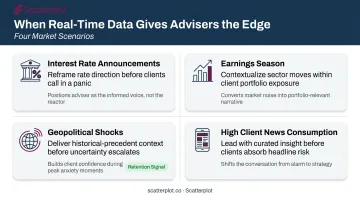
When this advantage matters most:
- Interest rate announcements
- Earnings seasons
- Geopolitical events or macro shocks
- Any period when clients are consuming financial news and expecting informed answers
KPIs affected: Client satisfaction scores, retention rates, response time to inquiries, documented investment rationale quality
Advantage 2: More Credible and Impactful Client Presentations
Clients notice when a deck feels current. They also notice when it doesn't.
An outdated chart in a quarterly review — one that shows market data from two months ago when the client pulled up their account on their phone that morning — signals something specific: that the adviser didn't prepare for this meeting. The underlying advice might be sound, but the perception of inattention is already formed.
J.D. Power's 2024 U.S. Full-Service Investor Satisfaction Study found that 41% of advised client experiences were characterized as "transactional" — a dynamic J.D. Power flagged as vulnerable to lower-cost digital alternatives. Advisers who consistently show up with current, professionally designed materials are actively countering that transactional perception. They're demonstrating that the relationship is active, prepared, and worth the fee.
For advisers who rely on manual data sourcing, maintaining current presentations is a time problem as much as a data problem. Kitces research estimates advisers spend roughly 5.5 hours per week on investment-management-related tasks — and manually updating charts for client decks pulls directly from that budget.
Platforms like Scatterplot address this directly. Daily-updated, fully branded market visuals — customized with the adviser's logo, colors, and compliance disclosures — are available automatically, without the manual work of pulling data, building charts, or reformatting slides before each meeting.
When this advantage matters most:
- Quarterly review meetings
- New client onboarding presentations
- Prospect pitches where first impressions determine whether a relationship begins
KPIs affected: Client meeting satisfaction, prospect conversion rates, referral rates, deck preparation time
Advantage 3: Proactive Risk Management and Portfolio Communication
Clients remember which adviser called them first during a downturn — and which one they had to chase. Research consistently shows that timing of outreach during volatile periods affects whether clients stay.
Cerulli has documented that advisers offering proactive financial planning communication during volatile periods find clients are better positioned to stay the course and remain calm despite declining markets. When clients hear from their adviser first — with context rather than alarm — they're less likely to make reactive decisions and more likely to trust that their portfolio is being watched.
Current market data is what makes that proactive outreach possible. An adviser monitoring daily-updated sector performance or economic indicators can spot emerging risks — a sharp move in rates, a concentrated sector drawdown — before clients notice them independently. That visibility enables outreach with substance: not just a call to check in, but a call that explains what's happening and what, if anything, it means for the client's portfolio.
There's a compliance dimension here as well. Advisers using current data when documenting portfolio decisions create a stronger record of real-time reasoning — which matters when fiduciary standards require demonstrating that recommendations were grounded in current conditions.
When this advantage matters most:
- Rapid market movements or sector-specific shocks
- Macro events where clients are likely to react emotionally before speaking with their adviser
- Drawdown periods where AUM stability depends on client confidence
KPIs affected: Client retention rate, AUM stability during drawdowns, proactive outreach frequency, compliance documentation quality
What Happens When Real-Time Data Is Missing
The consequences of stale data aren't abstract. They show up in specific, recurring situations:
- A client arrives at a quarterly review having already checked their portfolio app. The adviser's charts show data from three weeks ago. The client notices. The adviser loses the room before the conversation starts.
- A market event happens mid-week. Clients start calling. The adviser doesn't have current data ready and has to defer or pull numbers from memory. The perception: unprepared.
- A prospect pitch includes charts that could have been pulled from any deck over the past six months. The prospect picks up on it. The referral doesn't convert.
Beyond client-facing consequences, there's a real operational cost. McKinsey research found that relationship managers typically spend 60–70% of their time on non-revenue-generating activities — often because of reliance on legacy processes and manual workflows. Manual chart sourcing and deck updates are a major contributor to that pattern.
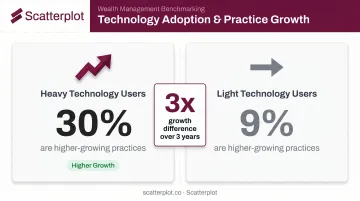
That operational drag compounds into a competitive disadvantage. Cerulli's 2024 wealth management technology report found that nearly 30% of heavy technology users are higher-growing practices in terms of new client acquisition, compared with just 9% of light technology users over a three-year period. Advisers who delay automated data workflows aren't just spending more hours on prep — they're ceding new client growth to peers who already made the shift.
How to Get the Most Value from Real-Time Data Updates
Current data delivers maximum value when it's built into an adviser's regular workflow — not pulled together the night before an important meeting.
A few practical shifts make the difference:
- Make daily-updated data a standing resource, not an ad hoc preparation task
- Review current market visuals before client calls — not just quarterly reviews. This keeps advisers oriented to what clients are likely asking about.
- Use current data to trigger proactive outreach. A notable market move is an opportunity to reach clients before they reach you.
- Ensure materials are client-ready by default, with branding, disclosures, and talking points already in place
The last point is where platforms designed specifically for advisers create measurable time savings. Scatterplot delivers daily-updated market visuals — charts on markets and the economy — customized with each firm's logo, colors, and compliance disclosures. Guided talking points come included for every slide. Advisers can present directly from the platform or download slides as a PDF, with no manual data sourcing or chart formatting required. That preparation time goes back to client-facing work, where it belongs.
Conclusion
The core value of real-time data for financial advisers compounds across three outcomes: sharper decision-making during volatile periods, stronger client credibility through current, professional materials, and proactive risk communication that gets ahead of client anxiety rather than responding to it.
None of these advantages require sophisticated back-end infrastructure. They require a consistent practice of showing up to every client interaction with data that reflects what's actually happening in markets — not last month's snapshot.
The advisers who do this consistently are the ones clients trust through market cycles, refer to their networks, and stay with when things get difficult. The gap between those who show up prepared and those who don't has never been more apparent to clients.
Platforms like Scatterplot are built specifically for this practice — delivering daily-updated, branded market visuals and guided talking points so advisers spend less time chasing data and more time in the conversations that matter.
Disclaimer
The content on this site is for informational and educational purposes only and does not constitute financial, investment, legal, or tax advice. It should not be relied upon as the basis for any investment decision. Past performance is not indicative of future results. Always consult a qualified financial professional before making any financial decisions.
Frequently Asked Questions
What are the benefits of real-time data processing?
Real-time data processing lets financial professionals access and act on current information rather than lagging reports. For advisers, this means faster responses to client questions, better-informed recommendations, and the ability to spot risks before clients do.
What is the difference between real-time data and batch data in financial services?
Batch data is processed at set intervals — often end-of-day or weekly — while daily-updated data reflects current market conditions. For client-facing advisers, daily updates ensure presentations and recommendations are grounded in what's happening now, not last week's close.
How does real-time market data improve client trust for financial advisers?
Advisers who present current, well-sourced market data demonstrate preparedness and active portfolio monitoring — qualities clients directly associate with competence. Showing up with current charts signals that the adviser is engaged with markets, not recycling materials from last quarter.
How often should financial advisers update the market data they use with clients?
Daily updates are the practical standard for client-facing materials. This ensures charts and economic visuals reflect recent conditions — particularly important during volatile periods when clients are tracking markets closely and expecting their adviser to have current answers.
What are the risks of presenting outdated financial data to clients?
The risks include loss of client confidence when the client has more current information than the adviser, investment decisions based on stale assumptions, and compliance exposure when recommendations aren't grounded in current market conditions — all of which can be hard to recover from reputationally.
Can real-time data updates reduce the time advisers spend on presentation prep?
Yes — when current data is delivered through an automated, adviser-ready platform, the manual work of sourcing, formatting, and updating charts is eliminated entirely. Advisers redirect that time to client relationships and business development rather than slide preparation.